
Call Us
+91 7302011153
About Us
The argument in favor of using filler text goes something like this: If you use real content in the Consulting Process, anytime you reach a review point you’ll end up reviewing and negotiating the content itself and not the design.
Gallery
Social Account
Search
People also search for:
The Complete Guide to Packing for a Himalayan Trek
What You Really Need for a Safe & Comfortable Trek?
Trekking in the Himalayas is an unforgettable experience. But packing for a Himalayan trek is very different from packing for a normal trip.
The terrain is tough.
The weather changes quickly.
And once you’re in the mountains, there’s no nearby shop if you forget something.
That’s why the right trekking gear is not just about comfort — it’s about safety.
If you’re confused about what to carry, this simple guide will help you pack smart.
Why Proper Trekking Gear Matters?
Regular travel clothes won’t work in the mountains.
- Sports shoes lose grip on wet or rocky trails
- Jeans take forever to dry
- Hoodies don’t protect you from wind or snow
- A school backpack can hurt your back during long hikes
Trekking gear is specially designed for mountain conditions. It keeps you warm, dry, balanced, and protected — especially above 10,000 ft where weather becomes serious.
✅ Essential Trekking Gear Checklist
1️⃣ Backpack (50–60 Liters)
Choose a backpack with:
- Padded shoulder straps
- Hip belt for weight support
- Chest strap for stability
It should sit comfortably on your back for long hours.
2️⃣ Trekking Shoes
Your shoes are the most important part of your gear.
Look for:
- High ankle support
- Strong grip (for snow and loose rocks)
- Water resistance
Avoid regular sports shoes.
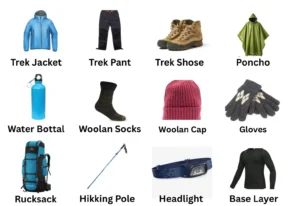
3️⃣ Warm Clothing (3-Layer System)
To stay warm in the Himalayas, use layering:
Base Layer (Thermal)
Worn inside. Keeps body heat trapped.
Mid Layer (Fleece)
Provides insulation.
Outer Layer (Jacket)
Windproof and waterproof padded jacket.
This combination keeps you warm even in sub-zero temperatures.
4️⃣ Trekking Pants (At Least 2 Pairs)
- Quick-dry material
- Stretchable and lightweight
- Comfortable for climbing
Avoid jeans and cotton joggers.
5️⃣ Essential Accessories
- Woolen Cap – Keeps head and ears warm
- Gloves – Warm pair (waterproof if snow expected)
- Neck Warmer – Protects from cold wind
- Sunglasses (UV Protection) – Very important during snow treks
Snow glare can seriously affect your eyes.
6️⃣ Rain Protection
Carry:
- Lightweight raincoat or poncho
- Must cover both you and your backpack
Mountain weather changes quickly — always be prepared.
7️⃣ Headlamp (Not a Torch)
- Keeps your hands free
- Useful for night treks and tent use
- Carry extra batteries
8️⃣ Water Bottle (Minimum 1 Liter)
- Avoid single-use plastic bottles
- Insulated bottles help in cold weather
- Hydration packs are also a good option
💊 Other Important Items
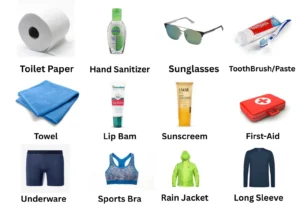
- Small first-aid kit (bandages, ORS, personal medicines)
- Toothbrush, paste, toilet paper, sanitizer
- Sunscreen (SPF 30+), lip balm (with SPF)
- Zip pouches (to keep clothes and electronics dry)
- Trekking poles (optional but very helpful)
🔁 Should You Buy or Rent?
If you trek once a year, renting gear like shoes, jackets, and backpacks makes sense.
If you trek regularly, investing in your own gear is better and more comfortable.
📌 Final Tips – Pack Smart, Not Heavy
- Carry only what’s essential
- Avoid cotton clothes
- Try wearing your packed gear before the trek
- Check your trek’s altitude and season
- Adjust your layers accordingly
Trekking isn’t about looking adventurous.
It’s about being prepared.
The mountains don’t care about brands — but they will test your gear every single day.
Need a Personalized Gear List?
Tell me:
- Your trek name
- The season (summer, monsoon, winter)
- Expected altitude
I’ll create a customized checklist just for you.
Let’s make your Himalayan trek safe, light, and unforgettable.
Share Article:

admin